Loading...

News

Twitter data reveals partisan divide in understanding why pollen season’s getting worse

From Michigan News By Matt Davenport Despite this gap, however, there are opportunities to communicate the real-world impacts of climate change, the research team says In analyzing tweets about pollen, University of Michigan researchers have found new opportunities to communicate about climate change. Image credit: Twitter/X (Cardi B post)/Adobe Stock (Pollen photo) Study: Political ideology and scientific communication shape human perceptions of pollen seasons (DOI: 10.1093/pnasnexus/pgaf386) Two things are clear from a University of Michigan analysis of [...]

2026-01-08T15:44:56-05:00

Lab members present at AGU25 in New Orleans

We are excited to announce that three members of our lab presented their latest research at the AGU25 Annual Meeting held December 15–19, 2025, in New Orleans, LA. Shengxi Gui shared research focusing on the impact of prior burns on reducing the risk of irreversible forest loss following wildfires. GC12D-07: Low-Severity Prior Burns Reduce the Risk of Irreversible Forest Loss Following Crucial Wildfires Yiluan Song delivered two presentations exploring how biological changes and scientific communication shape human perceptions of [...]

2026-01-01T11:36:24-05:00

Lab farewell: Congratulations to Yiluan and Wenqi

The lab recently gathered to bid farewell to Yiluan Song and Wenqi Luo as they finish their postdoc appointments. Yiluan is heading to the University of Pittsburgh as an assistant professor, and Wenqi is moving back to China and has just published a paper in Global Change Biology—congratulations! Best wishes to both as they move forward!

2025-12-03T22:31:58-05:00

Exploring tree migration: Kai Zhu featured in social media video

Our lab’s expertise on tree migration was recently featured in a short video collaboration with Alex Haraus! In the video, Dr. Kai Zhu, together with colleague Dr. Inés Ibáñez, discusses how and why trees are migrating in response to climate change—a phenomenon with important implications for the future of our forests. Check out the video to learn more about our research and the impacts of shifting tree populations: https://www.instagram.com/reel/DQ9chFIkRIJ/

2025-11-15T11:58:32-05:00

Michigan’s muted fall foliage may be a symptom of climate change

From The Michigan Daily By Hannah Bodnar While a number of trees in Ann Arbor are exhibiting their vivid reds, oranges and yellows this autumn, some have only just now begun to undergo this transformation. Compared to Michigan’s typical mid-September and October peak period for fall foliage that helps make it a tourism hot spot, this late start is a symptom of climate change that may extend into future fall seasons due to global warming.  Delayed peak colors are [...]

2025-11-11T21:17:59-05:00

Clark Lab Reunion at ESA 2025 in Baltimore

It was a wonderful experience to reconnect with colleagues, mentors, and friends at the Clark Lab & Descendants gathering during the 2025 Ecological Society of America (ESA) Annual Meeting in Baltimore. As Kai’s Ph.D. advisor at Duke University, Jim Clark has fostered a vibrant and far-reaching academic family, and this event brought together current lab members, alumni, and “grandstudents” for an evening filled with lively conversation, laughter, and exciting discussions about new research directions. Zhu [...]

2025-08-15T09:28:03-04:00

Getting sneezier? Blame climate change for making fungal allergy season longer

From KQED By Sarah Mohamad   If your springtime allergies have felt sneezier and sneezier, you might be right. And pollen is likely not the only culprit. Mold and other fungi release microscopic spores that can also trigger allergy symptoms, and a new study found the invisible allergens are now showing up earlier each year. Researchers at the University of Michigan found that fungal spore season in the U.S. is starting nearly a month earlier than it did [...]

2025-11-11T21:08:58-05:00

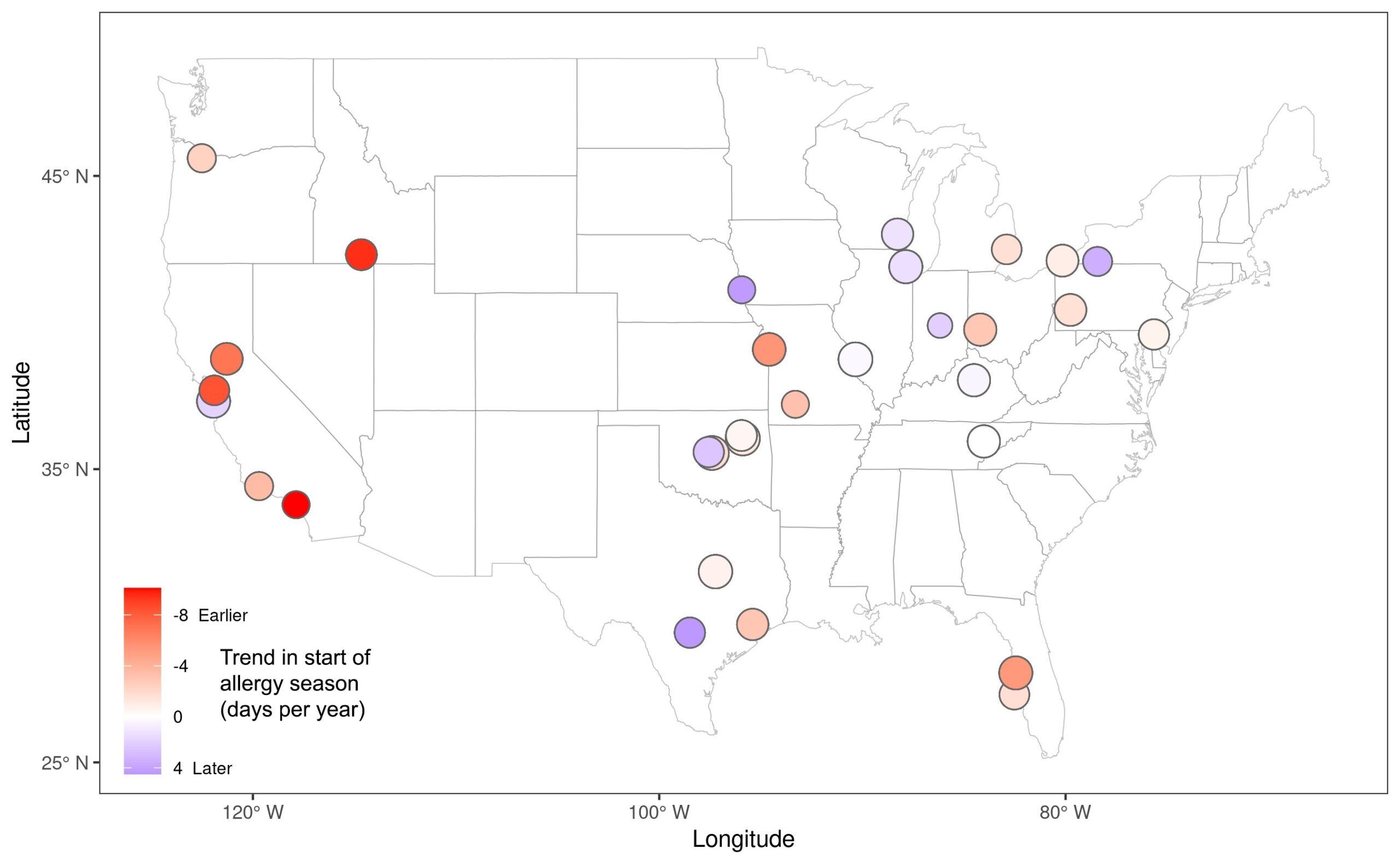
Seasonal allergies caused by fungal spores now start three weeks earlier under climate change

From: Michigan News New paper: Wu R, Song Y, Head JR, Katz DS, Peay KG, Shedden K, Zhu K (2025) Fungal spore seasons advanced across the US over two decades of climate change. GeoHealth, 9, e2024GH001323. https://doi.org/10.1029/2024GH001323 A first-of-its-kind study led by the University of Michigan has ‘implications for both ecosystem processes and human health’ Although many of us spend allergy season cursing out plant pollen, spores from mold and other fungi also deserve some of that same disdain. These invisibly [...]
2025-06-30T14:14:40-04:00

Ecological Acclimation Workshop

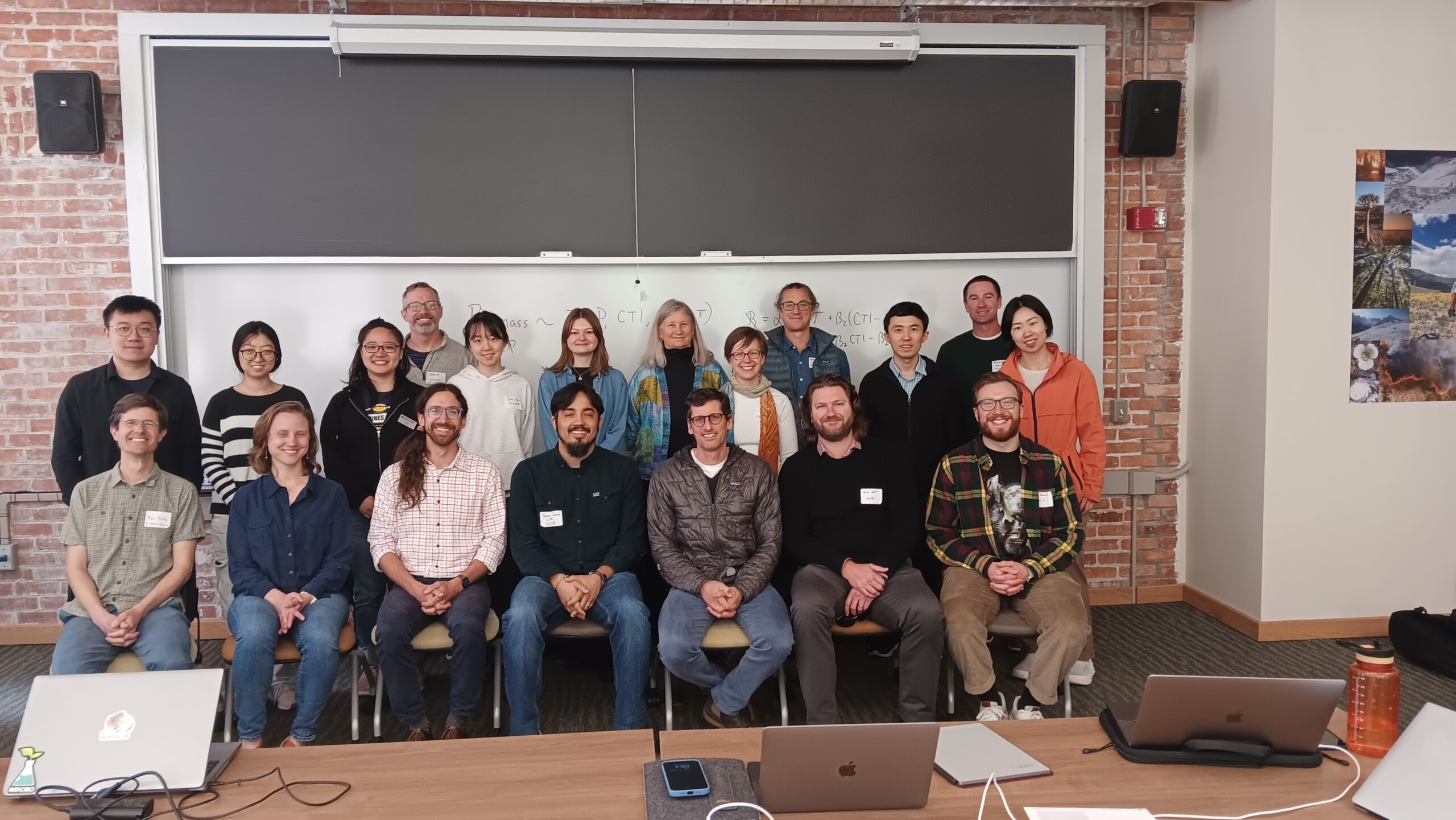
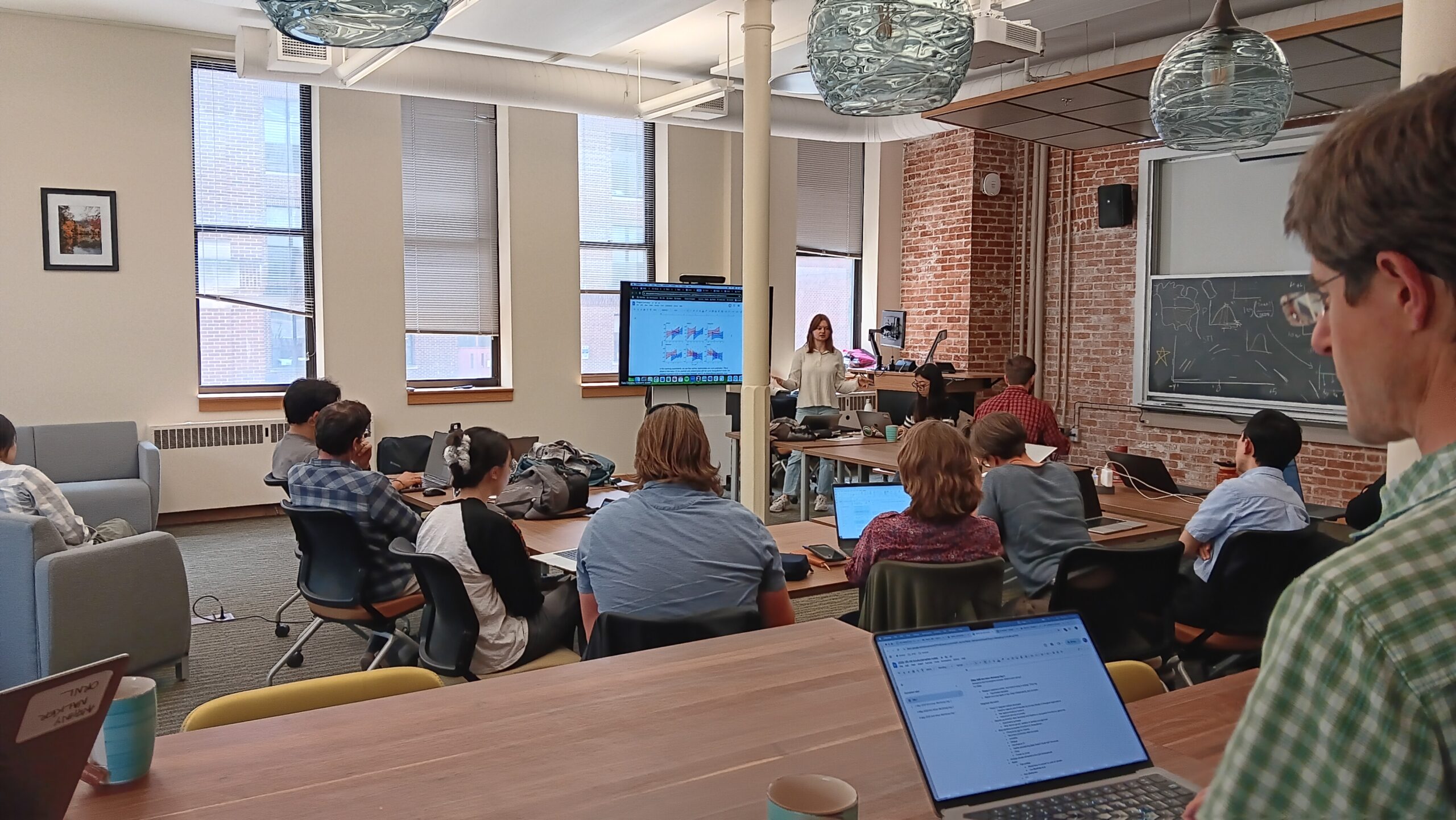
From May 5 to 9, members of the lab attended the Ecological Acclimation workshop, hosted at U-M through the IGCB. The workshop featured multiple brainstorming sessions on projects related to ecological community responses to global change and the resulting impacts on ecosystem function. Kara Dobson led two sessions focused on climate change experiments and forest sensitivities to climate.

2025-05-17T09:26:18-04:00
Go to Top