


Principal Investigator
Kai Zhu, PhD
Dr. Kai Zhu is an Associate Professor at the University of Michigan, where he holds joint appointments in the School for Environment and Sustainability, the Institute for Global Change Biology, and the Department of Ecology and Evolutionary Biology. In addition, Dr. Zhu is a Faculty Affiliate with the Michigan Institute for Data and AI in Society, the Michigan Institute for Computational Discovery and Engineering, and the Erb Institute. Dr. Zhu’s research interests revolve around global change biology, ecological modeling, and environmental data science. He brings together his expertise in ecology, statistics, and computer science to advance the understanding of how plants and soil respond to environmental changes. His research spans a wide range of scales, from local experiments to global analyses. Dr. Zhu has been recognized for his contributions to the field, having received the National Science Foundation CAREER Award, been elected as an Ecological Society of America Early Career Fellow, and won the New Phytologist Tansley Medal. Dr. Zhu completed his postdoctoral fellowship in global ecology at Stanford University, and earned his PhD degree in ecology and master’s degree in statistics from Duke University.
CV: link
Google Scholar: link
New Phytologist profile: link
Email: zhukai at umich dot edu
Postdoctoral Fellows
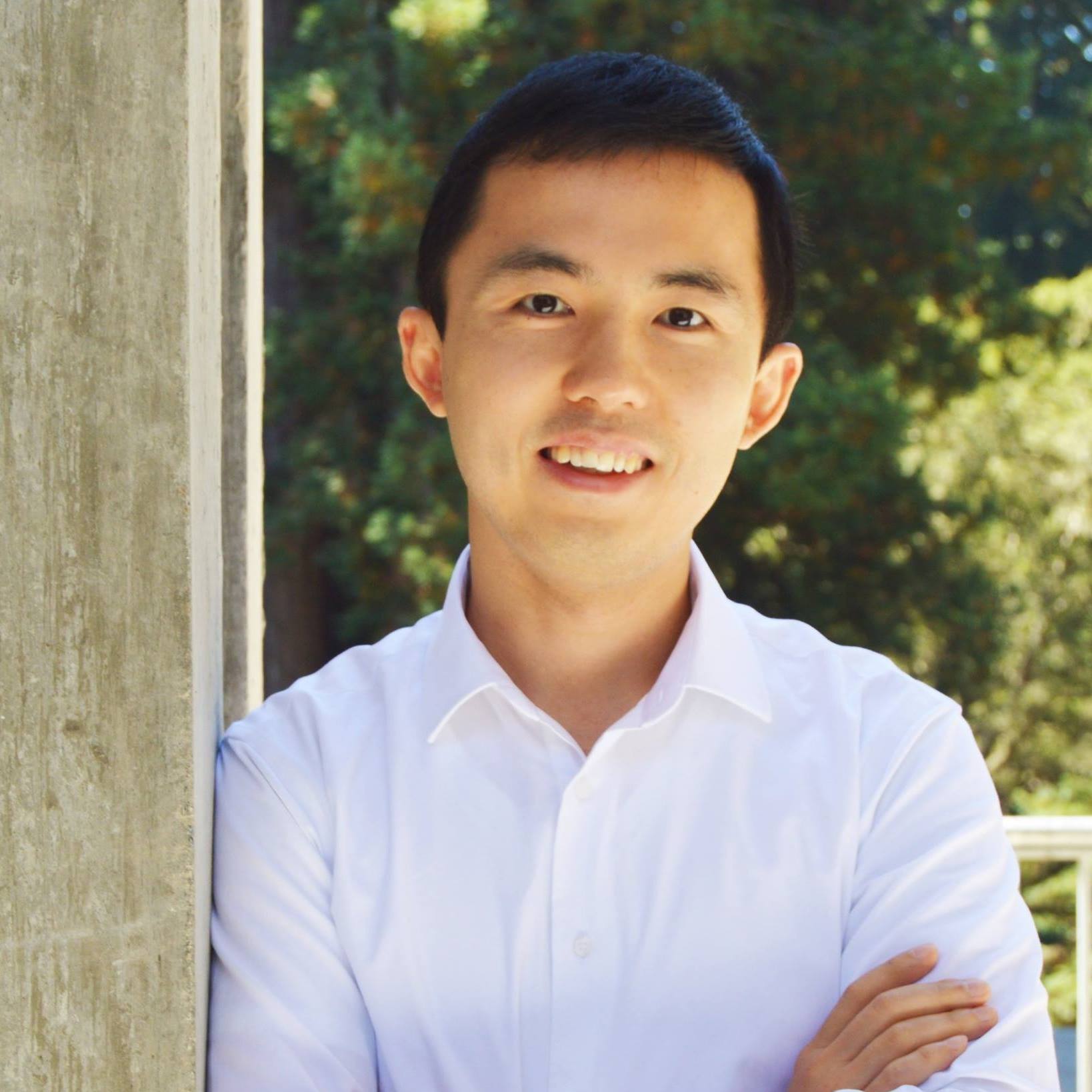
Kara Dobson, PhD
Dr. Kara Dobson is a Postdoctoral Fellow in the Institute for Global Change Biology in the School for Environment and Sustainability at the University of Michigan, co-advised by Drs. Kai Zhu and Peter Reich. Kara is interested in understanding how climate change stressors, such as warming or drought, affect plant traits, plant community composition, and species distributions. Kara received her PhD from Michigan State University, where she used a mix of field, lab, and data-focused techniques to understand climate change effects on plant traits and community properties.
Website: link
Email: kcdobson at umich dot edu

Shengxi Gui, PhD
Dr. Shengxi Gui is a Postdoctoral Fellow in the School for Environment and Sustainability at the University of Michigan, co-advised by Drs. Kai Zhu and Ben Goldstein. Shengxi’s work uses geospatial tools to study forest ecology and industrial ecology, to better understand the impact of using forests to capture carbon and mitigate climate change. Shengxi received his PhD degree in remote sensing and photogrammetry from Ohio State University in 2024, where he used satellite-based 2D & 3D data to analyze postfire forest recovery and urban geometric structures.
Google Scholar: link
Email: guisx at umich dot edu
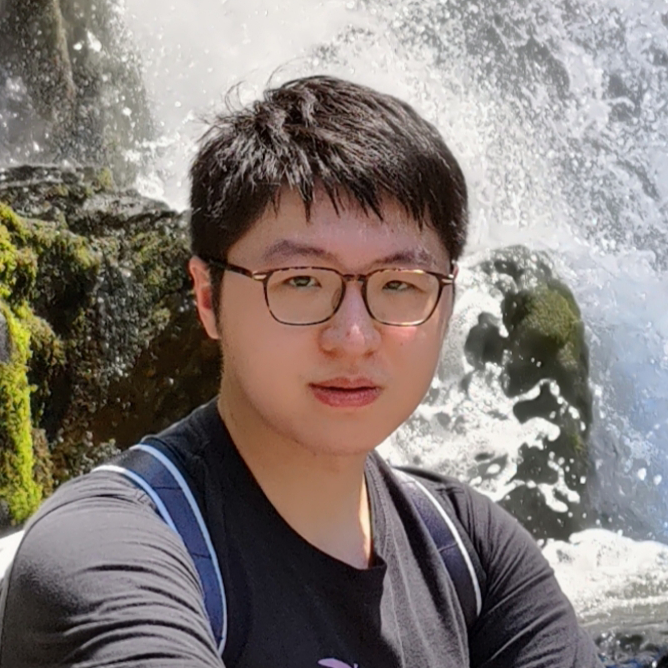
Wenqi Luo, PhD
Dr. Wenqi Luo is a Postdoctoral Fellow in the Institute for Global Change Biology in the School for Environment and Sustainability at the University of Michigan, co-advised by Drs. Kai Zhu and Peter Reich. Wenqi enjoys looking deep into nature and embracing all forms of diversity. His current work focuses on how global change factors may affect microbial redistributions and therefore ecosystem functions through the lens of soil-fungal-plant interactions. He is also experimentally investigating the effects of soil microbes on plant-plant interactions in the framework of modern coexistence theory. Wenqi obtained his master’s degree in botany from Hainan University, his PhD degree in ecology from Sun Yat-sen University, and spent a year as a visiting scholar at the Pennsylvania State University.
CV: link
Email: wenqil at umich dot edu
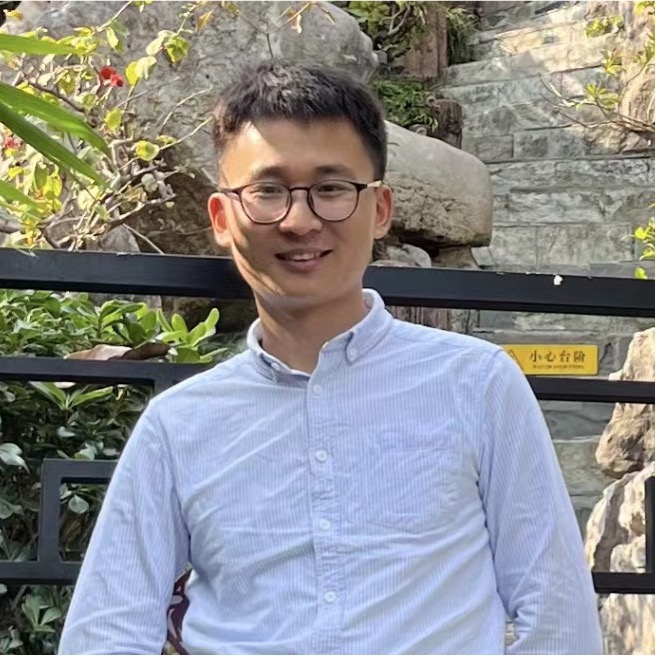
Yiluan Song, PhD
Dr. Yiluan Song is a Postdoctoral Fellow at the Michigan Institute for Data Science, supported by the Eric and Wendy Schmidt AI in Science Postdoctoral Fellowship, co-advised by Drs. Kai Zhu and Yang Chen. Yiluan is also affiliated with the Institute of Global Change Biology at the University of Michigan. Yiluan is interested in integrating mechanistic understanding and cutting-edge machine learning methods to study how ecosystems respond to global change drivers. Her current research focuses on understanding and predicting changes in seasonality and biodiversity during climate change. Yiluan received her PhD in Environmental Studies from the University of California, Santa Cruz. Her PhD research centered around phenology in the Anthropocene, where she explored the interactions between ecology, climate change, and human society.
Website: link
Email: songyl at umich dot edu

Hengxing Zou, PhD
Dr. Hengxing Zou is a Postdoctoral Fellow in the Institute for Global Change Biology in the School for Environment and Sustainability at the University of Michigan, co-advised by Drs. Brian Weeks and Kai Zhu. Hengxing is interested in how the change in species distribution over space and time affects species interaction. Using survey data of bird populations, he is now working on how spatial range shifts over half a century may have affected local diversity and bird-bird interactions. Hengxing received his PhD from Rice University, where he used a combination of theoretical models and controlled experiments to investigate the consequences of species timing on their interactions and community composition.
Website: link
Email: hxzou at umich dot edu

PhD Students
Tim Muhich
Mr. Tim Muhich is a PhD Student in the School for Environment and Sustainability at the University of Michigan, co-advised by Drs. Michaela Zint and Kai Zhu. He graduated from Michigan State University in 2012 with a BS in Biological Sciences, minoring in Chemistry, and a BS in Zoology with a concentration in Marine Biology before teaching high school chemistry and climate change for a decade. Tim’s research interests revolve around how to increase access to high-quality climate change educational experiences for high school students. Tim is currently working on projects related to phenology and climate education for biology students, as well as how to implement interdisciplinary climate education programs at the high school level.
Website: link
Email: tmuhich at umich dot edu

Shike Zhang
Mr. Shike Zhang is a PhD Student in the School for Environment and Sustainability at the University of Michigan. Shike is interested in climate change and wildfire dynamics in the western US. He aims to expand his knowledge of ecology and advanced statistical methods to develop numerical models and simulations that can assess the feedback of human activities on the ecosystem and ease its burden. Shike completed his undergraduate studies in 2022, graduating with a Bachelor of Science degree in Environmental Science from Tongji University.
Website: link
Email: zhangsk at umich dot edu
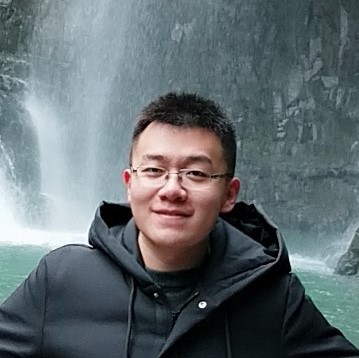
Jiali Zhu
Ms. Jiali Zhu is a PhD Student in the School for Environment and Sustainability at the University of Michigan. Jiali earned a BS in Environmental Engineering from Beijing Normal University in 2020 and is set to graduate from the Research Center for Eco-Environmental Sciences, Chinese Academy of Sciences, in June 2023 with an MS in Ecology. Her research interests lie in the dynamic interplay between urban plant phenology, climate change, and human activities. Currently, her research focuses on understanding how human-induced changes impact the local climate system within cities and identifying potential mitigation strategies to reduce climate risks. Outside of academia, Jiali is an avid sports enthusiast, with a particular talent in swimming and a newfound passion for snowboarding.
CV: link
Email: jializ at umich dot edu

Undergraduate Students
- Kai Sheng, Computer Science, machine learning and climate change
- Carby Wu, Computer Science and Mathematics, deep learning and computer vision in monitoring ecological and land-use change
- Jia Xi, Statistics and Geospatial Sciences, deep learning and geospatial analysis in monitoring biodiversity and climate change
Former Members
Postdoctoral Fellows
- Lan Liu, 2018, plant-microbe interaction in soil ecosystem
- Peter Pellitier, 2020-2022, biogeography and soil fungal ecology
- Brian Steidinger, 2019, biogeography of soil fungi
- Michael Van Nuland, 2021-2022, biogeography of plant-fungal symbioses
- Cong Wang, 2017-2018, remote sensing and plant phenology
- Liting Zheng, 2022-2024, forest biodiversity and ecosystem function
PhD Students
- Hayes Devaney, 2021-2022, vegetation-climate feedback
- Yi Liu, 2023-2025, temperature sensitivity of tree flowering phenology
- Sarah Lummis, 2019-2022, environmental change and marine ecology
- Clara Qin, 2018-2022, macroecology of soil microbiota
- Yiluan Song, 2018-2023, climate change and plant phenology
Master’s Students
- Xiuyu Cao, 2023-2025, remote sensing vegetation biomass
- Ross Davison, 2019-2020, mapping coastal ecosystem
- Diana Gerardo, 2019, velocity of climate and phenology change
- Kaixin Liu, 2019, ecological and environmental database
- Jessica Pan, 2022, phenology education website
- Mary Silva, 2019, Gaussian process modeling of phenology change
- Chuangbo Tong, 2022, natural language processing of phenology-related tweets
- Ruoyu Wu, 2022-2024, fungal spore phenology
Undergraduate Students
- Oviyan Anbarasu, 2023-2024, fire data science
- Megan Cao, 2021, social media and environmental impacts
- Zhe Chen, 2023, phenology education websites
- Chun Ho Ries Cheung, 2023, phenology education websites
- Luke Hamilton, 2021, plant phenology in social media
- Priscilla Lam, 2019-2020, climate change and wildfire
- William Jiajie Li, 2018, urban ecology and remote sensing
- Noa Mills, 2020-2021, wildfire trends in the US
- Cait Schilt, 2020, phenology and social media
- Benji Weaver, 2021, post-fire forest regrowth and regeneration
- Chris Zajic, 2018-2021, climate change and plant phenology
- Chenyang (Victor) Zhang, 2023, phenology modeling
- Ziyu Zhou, 2023-2024, phenology modeling
Visiting Graduate Students and Scholars
- Carolina Arguiano, 2024, forest mycorrhizal modeling, National University of La Plata, Argentina
- Shijing Liang, 2023, climate and vegetation dynamics, Southern University of Science and Technology, China
- Pengcheng Liu, 2023-2024, forest biodiversity and biogeography, East China Normal University, China